The color of your stool: what does it say about your health?
We all do it, yet we rarely talk about it. However, our stool reveals a lot about our health and lifestyle. By observing your stool, you can pick up important signals about what’s happening in your body. Indeed, it’s important to break the taboo and make stool a topic of discussion. Only then can you better understand what your body needs.

Summary
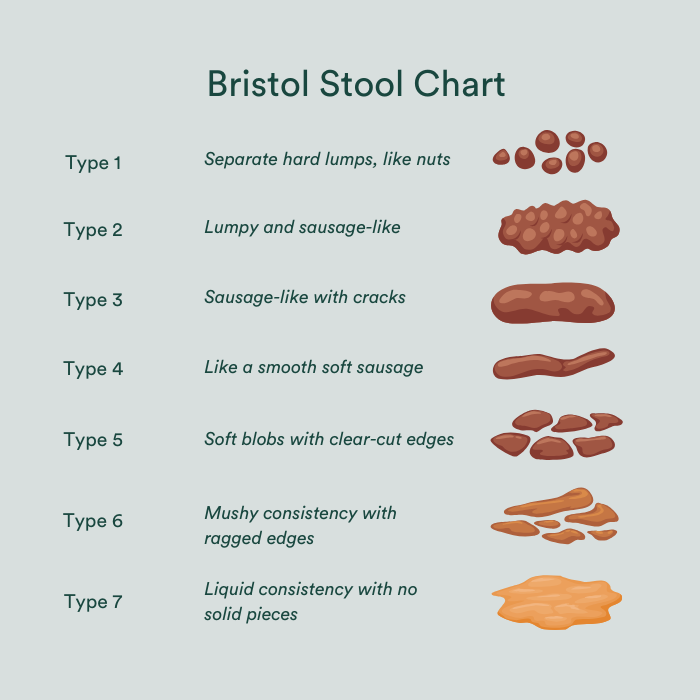
The Bristol Stool Chart
Bowel movements consist mainly of water, food residues that our body hasn’t used, and gut bacteria. Our body needs the water to break down nutrients and absorb them through the intestinal wall. The indigestible food residues ensure smooth bowel movements, and the bacteria come from our gut flora.
But our bowel movements are not the same every day, and there are also significant individual differences in terms of volume, frequency, shape, consistency and colour. All these factors tell us something about our lifestyle and health. The key message is: take a look in the toilet bowl!
Topics in this article
- The Bristol Stool Chart
- What causes the colour of stools?
- Green stools
- Yellow stools
- Black stools or melena
- Red stools
- Orange stools
- Light grey or clay-coloured stools
- A look back
- Insentials’ tips for healthy and regular bowel movements
You may have heard of the Bristol Stool Chart: a visual tool that helps you describe the shape and consistency of your stools. It allows you to describe your stools objectively, which can be useful, for example, during a consultation with your doctor. Types 3 and 4 indicate a normal shape and consistency of stools. The other types describe various forms of constipation (types 1 and 2) or diarrhoea (types 5, 6 and 7).
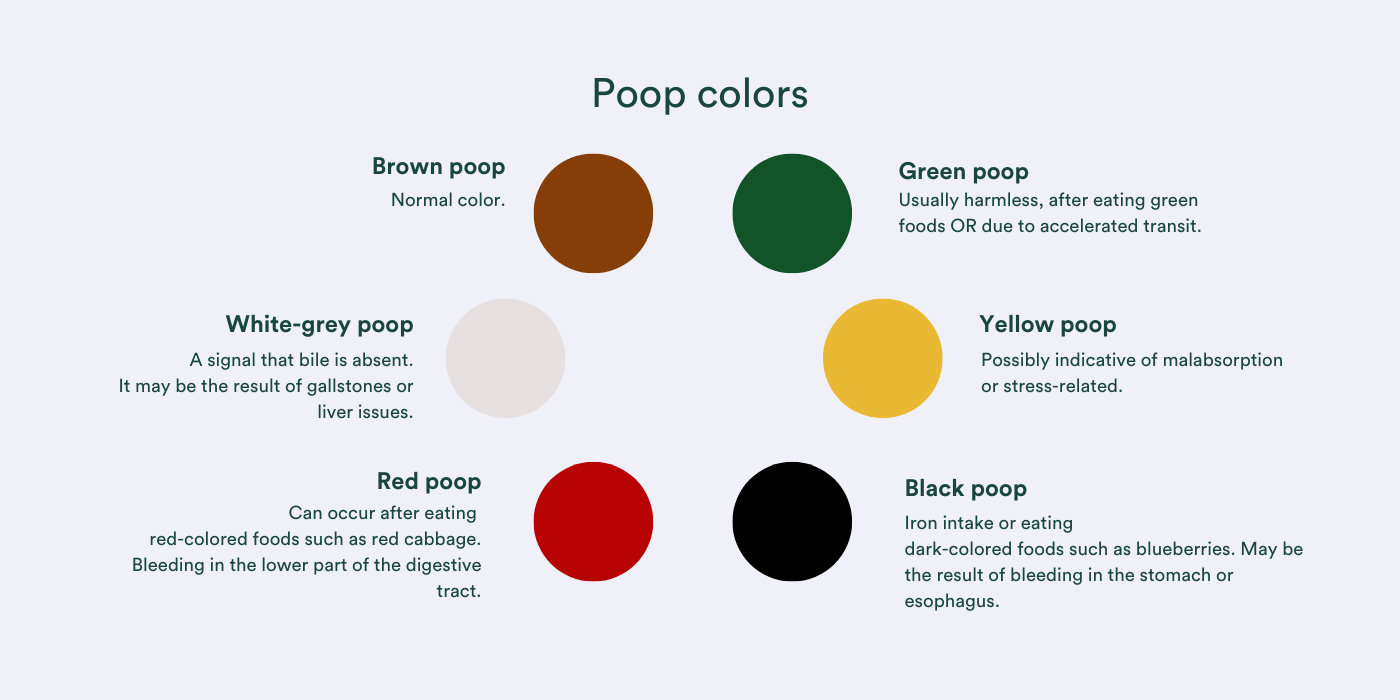
But what about the colour? Are healthy stools always brown? In this blog, we discuss the main colours you might encounter and what they mean.
Where does the colour of stools come from?
The colour of healthy stools ranges from light brown to dark brown. Variations in shades of brown are usually normal and depend on what you have eaten. Darker brown may be caused by foods rich in iron or meat. Lighter shades, on the other hand, may indicate a diet higher in fibre.
If we look into the origin of this colour, we end up at the liver. The liver plays a crucial role in detoxifying our body. This detoxification process aims to convert various harmful substances or toxins (such as alcohol, medication, caffeine, but also excess hormones) into substances that can be safely eliminated. These toxins are made water-soluble in the liver. They are then bound to, amongst other things, the body’s own antioxidant glutathione, before being safely excreted via urine or bile. It is precisely this bile that gives stools their brown colour.
Bile is a substance produced by the liver that aids in the digestion of fats. Bile is naturally yellow-green in colour, but as it passes through your digestive tract, its colour changes. This yellow colour, incidentally, results from the breakdown of red blood cells into bilirubin. Blood cells have a lifespan of around 120 days and leave the body in the form of bilirubin via urine and stools. Bilirubin gives urine a yellow colour and your stools a brown colour. Brown stools therefore indicate efficient detoxification by your liver.
If your stools are consistently brown, you can breathe a sigh of relief: your digestive system is working as it should. But what if your stools are a different colour?
Green stools
Green stools are usually harmless. If you have eaten a lot of green vegetables, such as broccoli or kale, your stools may take on a greener colour due to the presence of chlorophyll.
Another possible cause is rapid passage through the digestive tract. When food moves through your intestines too quickly, bile has less time to be broken down and remains green. This can happen, for example, due to diarrhoea, whether or not caused by an infection.
Incidentally, the stools of breastfed newborn babies are often yellow-green too. This is completely normal and nothing to worry about.
Yellow stools
Yellow, greasy stools that stick to the toilet bowl usually indicate malabsorption. Your body is not absorbing fats properly. This can happen, for example, when there are insufficient pancreatic enzymes to digest the fat in your diet.
Stress can also be a major cause of yellowish stools. It is mainly our stress hormones that prepare our body for stressful situations and, as a result, speed up bowel transit. This means your stools do not have time to develop their normal, brown colour. This is often accompanied by softer stools or even diarrhoea.
Stools can also take on a yellowish colour in the event of an infection causing diarrhoea. This is because there is more water in the stool due to the rapid intestinal transit. Intestinal cells produce extra fluid and mucus in response to the infection.
Black stools or melena
Black stools, also known as melena, can be caused by something relatively harmless, such as excessive iron intake. Eating spinach or blueberries, for example, can also cause this. However, it may also indicate bleeding in the upper part of the digestive tract, such as the stomach or oesophagus. Think of a stomach ulcer or inflammation. The blood is broken down and oxidised by stomach acid and enzymes, causing the stools to become very dark.
Black stools resulting from dark-coloured food should normally return to a normal brown colour after a few days. If you are unsure of the cause of the black colour and it persists, it is best to contact your doctor. Especially if the stools are black, tarry and sticky, it is important to raise the alarm to be on the safe side.
Blood in the stool
Bright red stools can be quite alarming, but the cause is not always serious. It is often due to eating red-coloured foods such as beetroot or red cabbage.
As mentioned above, black stools can indicate bleeding from the upper part of the digestive tract. Red-coloured stools, on the other hand, may be the result of bleeding in the lower part of your digestive system, such as from haemorrhoids or a tear in the anus. If you experience regular or heavy bleeding, you should see your doctor as soon as possible.
Orange stools
If your stools are orange, it’s best to check whether you’ve recently eaten foods containing carotenoids. This is a natural pigment found in foods such as sweet potatoes, carrots and apricots.
Light grey or clay-coloured stools
Grey, white or clay-coloured stools are a sign that there is no bile present. After all, it is the bilirubin in your bile that gives stools their brown or sometimes yellow-green colour. Possible causes include gallstones or liver problems. As bile is essential for the digestion of fats and the normal colour of stools, it is important to contact your doctor if you have discoloured stools.
Take a look back!
If you have a single bowel movement of a different colour, there’s no need to worry. Often, the change in colour is down to certain foods or drinks you’ve recently consumed. However, if the colour remains consistently abnormal, it’s best to contact your doctor. Break the taboo and discuss the colour, consistency and frequency of your bowel movements. It is a valuable source of information about your health.
Insentials tips for healthy and regular bowel movements
These 5 tips are crucial for regular bowel movements: