


Hormonal imbalance? Address the cause
Our hormones, they often get the blame when it comes to unwanted ailments and negative feelings. In total, you do have around a hundred hormones in your body. They each have their function and direct countless bodily processes. So you cannot live without them!

Summary
The hormones oestrogen and progesterone, as well as testosterone, are central to the hormonal, female life cycle. These chemical messengers hold our health and mental well-being in their hands. From menstruation to pregnancy and on into menopause.
The delicate balance of these hormones does get disrupted at times. As a result, many women face a range of symptoms. But fear not, because understanding these complex, female (dis)balances is not only essential, but also empowering.
In this blog, we take a closer look at 3 problem areas related to hormonal imbalances: the contraceptive pill, PMS complaints and (peri)menopause complaints.
Quitting the contraceptive pill. A good idea?
'The pill' is the most widely used method of contraception in Belgium. The advent of the pill was a real revolution, as women were in control of whether or not they became pregnant. While the pill was previously seen as an obvious choice, we find that women increasingly want to substantiate this choice.
First of all, we are neither for nor against the contraceptive pill. On the one hand, this method gives us a lot of freedom. On the other hand, we also want to encourage women to think about their impact on their bodies.
Most contraceptive pills contain synthetic hormones. These are usually a combination of oestrogen and progestogen (or only progestogen in the case of mini-pills). These hormones mimic the natural hormones produced in the female body. Thus, they regulate our natural menstrual cycle and prevent ovulation (ovulation), reducing the chances of pregnancy.
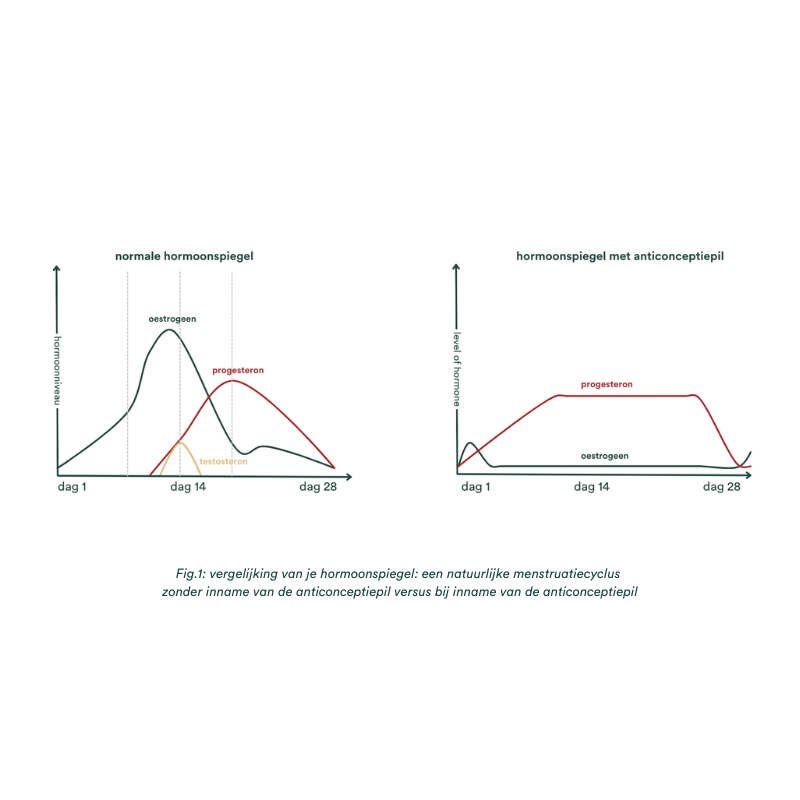
Some women use the pill to suppress certain unwanted hormonal symptoms. In other women, the pill itself then causes side effects such as weight gain, decrease in sexual desire, headaches and sensitive breasts, among others.
We also see that long-term use of the pill can affect the absorption and metabolism of certain vitamins and minerals in the body:
- The use of the contraceptive pill can lower the levels of folic acid in the body. Folic acid is essential for cell health and cell division. So also consider the cell division of your foetus if you are or want to become pregnant!
- The contraceptive pill can also reduce levels of vitamin B6 in the body in the long-term. Vitamin B6 is involved in several metabolic processes and plays a role in the production of neurotransmitters. Vitamin B6 deficiency can lead to symptoms such as skin problems, fatigue and mood swings.
Supporting your body during or after taking the pill?
Extra intake of vitamins when taking the pill, or when you stop taking the pill, are definitely recommended. Insentials' Smart Vitamins will already help you make up for deficiencies that typically occur when taking the pill. Smart Vitamins are an all-in-one pill that contains all the essential nutrients for a woman. This unique vitamin pill contains folic acid, iron, vitamins E, K2, D and B8 (biotin) and omega 3.
By the way, did you know that the recommended dosage of folic acid for women wishing to become pregnant is 400µg of folic acid? In Insentials' Smart Vitamins, there is a whopping 500mcg of folic acid. This puts an extra stake in your own health as well as that of your future baby if you wish to become pregnant.
Have you been taking the pill for more than 15 years? Then it is advisable to give your body extra support with vitamin B6, B5 and magnesium. But herbs like Ashwagandha and Maca are also powerful resources here:
- Ashwagandha is classified as an adaptogen. It helps reduce stress and anxiety, improve mood, enhance cognitive functions and support immune health. It also possesses anti-inflammatory and antioxidant properties.
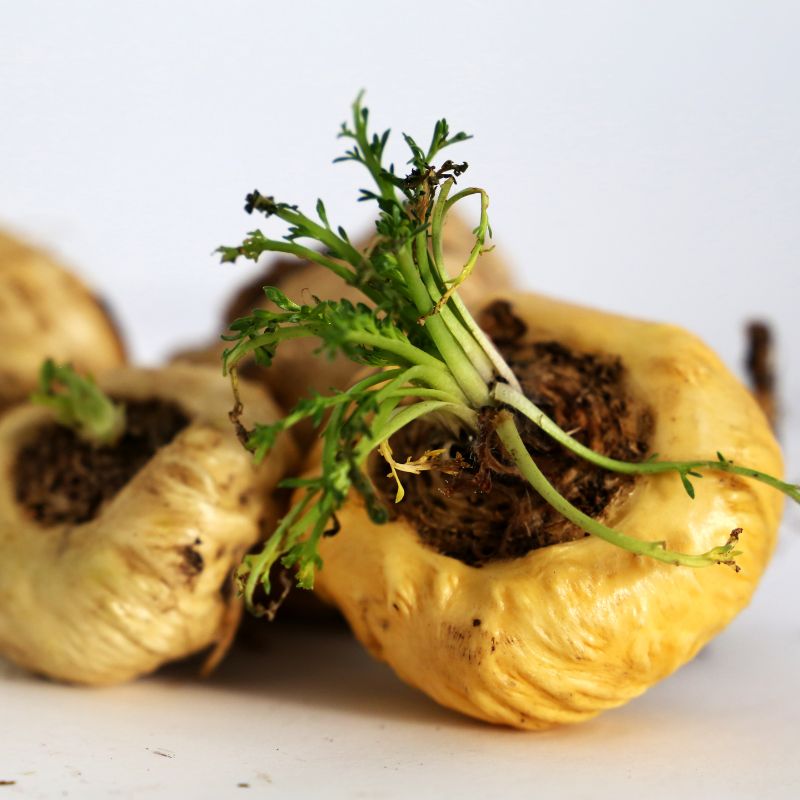
- Maca is a natural remedy to increase energy, boost libido, balance hormones and improve stamina. Some people also use it to reduce symptoms of menopause and promote fertility.
Both ingredients can be found in Insentials' Balance Me.
You can perfectly combine the Balance Me with the Smart Vitamins. You'll find both in the Insentials Hormonal Balance Pack.
Are severe PMS symptoms a monthly recurring issue?
Premenstrual syndrome, PMS for short, is characterised by one or more of the following symptoms: mood swings, negative or irritable feelings, bloating, headaches, sensitive breasts, loss of sexual desire, skin changes (spots or dryness), and so on. Typically, these PMS symptoms occur mostly in the period just before blood loss, during the 'autumn' of your cycle.
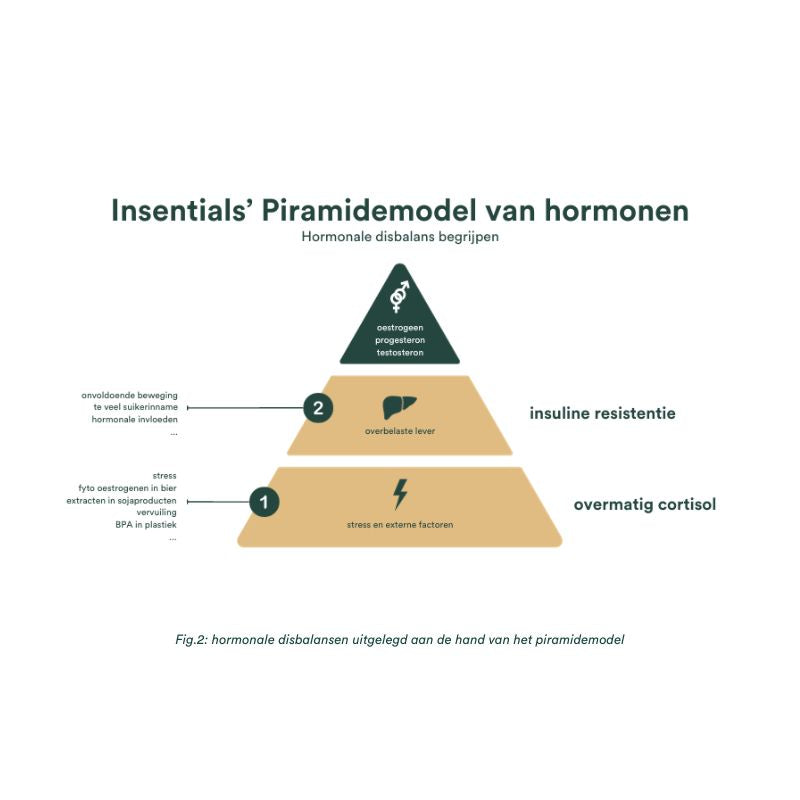
These complaints are related to hormonal imbalances on two levels. On the one hand, there is the impact of stress and external factors. On the other hand, there is insulin resistance as an amplifying factor. These imbalances are best understood using the pyramid model. After all, if the two lower levels of the pyramid are out of balance, this affects the levels above them. This is the level of our sex hormones.
Stress and other external factors
First of all, there are several external factors that can imbalance our hormones. Think phytoestrogens in heavy beers, oestrogen-like substances in our environment, isoflavones in soy products, air pollution and BPA in plastic. Often, we have no control over these external factors. Yet we cannot deny their impact on our hormone household.
There is also the influence of stress. PMS is most common in women between the ages of 35 and 45. During this stage of life, a lot of responsibilities come together. We want to be a good mother, a good worker, a good friend and a good partner. That's a lot of balls we are trying to keep in the air at the same time.
These different roles cause increased levels of cortisol. Cortisol is a stress hormone that is evolutionarily very powerful. It increases spare fat storage and lowers progesterone. In the past, these reactions clearly had their benefits. We could use the fat reserves during our response to dangerous, stressful situations. On the other hand, lowering progesterone made us less fertile. After all, getting pregnant in stressful situations is not ideal.
Today, however, these reactions are more likely to cause adverse effects. Stress makes us fatter and our hormonal balance gets messed up. If you know that progesterone creates a positive mood, it is obvious that lowering this hormone often leads to mood swings and negative feelings.
The liver's role for hormone balance
At the second level, insulin resistance can be referred to as a major disruptor. Insulin resistance means that your cells do not absorb glucose as well. You take in this fuel via carbohydrates. You need glucose to maintain your energy levels. So it stays in the blood longer and goes harder to your cells; where you need the energy.
A first consequence of this is that you get 'cravings'. Your body literally craves more energy, even though that glucose intake was already sufficient. Other consequences are that the glucose in your blood will be stored as visceral fat around your organs.
First of all, your liver will become fatty and thus overloaded. Your liver plays an essential role in your hormone management. This overload will lead to less production of the enzyme aromatase, and consequently less oestrogen. As a result, your balance of oestrogen-testosterone becomes unbalanced. This then results in the well-known PMS symptoms. In some cases, this even leads to PCOS or Polycystic Ovarian Syndrome.
How does insulin resistance occur
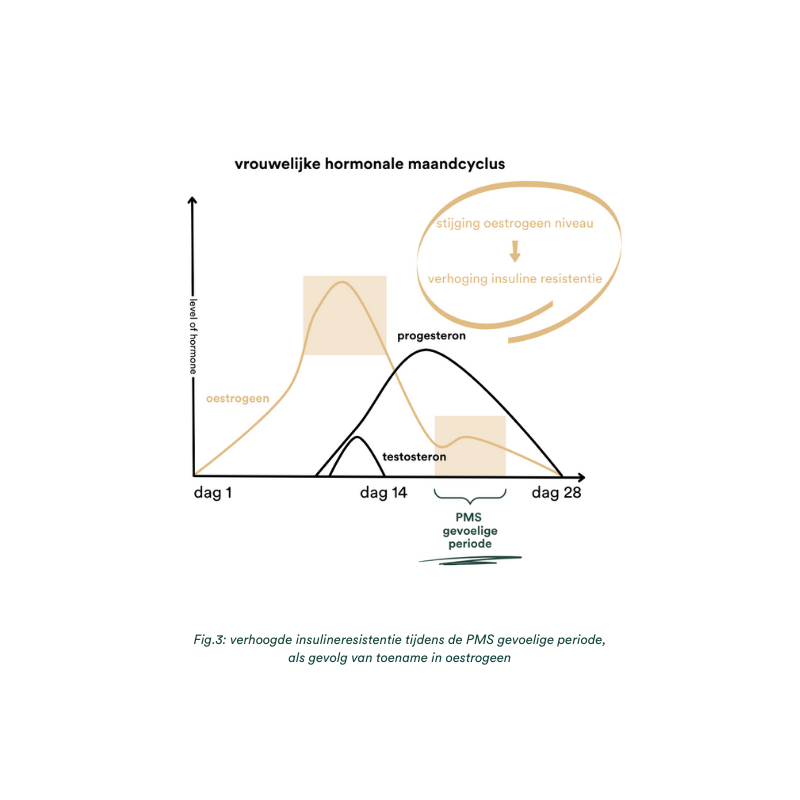
You can get insulin resistance from an unhealthy lifestyle and diet. But increased oestrogen during your natural cycle can also lead to increased insulin resistance. Just before your period breaks, you will experience cravings more often. You will then need more carbohydrates to keep your energy levels sufficiently high.
How can you support your body during PMS symptoms?
To prevent insulin resistance during the PMS sensitive period, it is best to choose complex carbohydrates such as oatmeal, whole-grain cereals and vegetables. Tip: definitely eat broccoli during your premenstrual period. Broccoli belongs to the cruciferous vegetables and these have a strong effect on your hormone balance. They contain the substance DIM, short for di-indolylmethane. This substance makes it easier for your liver to eliminate excess oestrogen.
But dietary advice during your premenstrual phase is not so simple. After all, mental symptoms like mood swings and negative feelings can also be taken care of by food that increases your reward hormone or serotonin. Then we are more likely to talk about simple carbohydrates, aka quick sugars or comfort food.
In this way, you end up with a pure contradiction. Both complex and simple carbohydrates seem to have their benefits. Therefore, it is smart to bet on the intake of substances like Maca and Ashwagandha, without having to make a choice between complex or simple carbohydrates. Ashwagandha will help reduce mental symptoms, while Maca will help restore your physical, hormonal imbalance.
If you suffer from severe symptoms, consider purchasing the Smart Balance Pack. This pack contains the Smart Vitamins, Balance Me, as well as the Detox Boost. The latter will provide maximum support to your liver using the patented Lipoglutathox™.
This complex of, on the one hand, choline and NAC will facilitate the elimination of your toxins in the liver by making them water-soluble. On the other hand, it also contains glutathione, our main antioxidant, for the elimination of toxins. This way, your liver is optimally relieved and you avoid high levels of insulin resistance.
Why do you gain pounds from your premenopause?
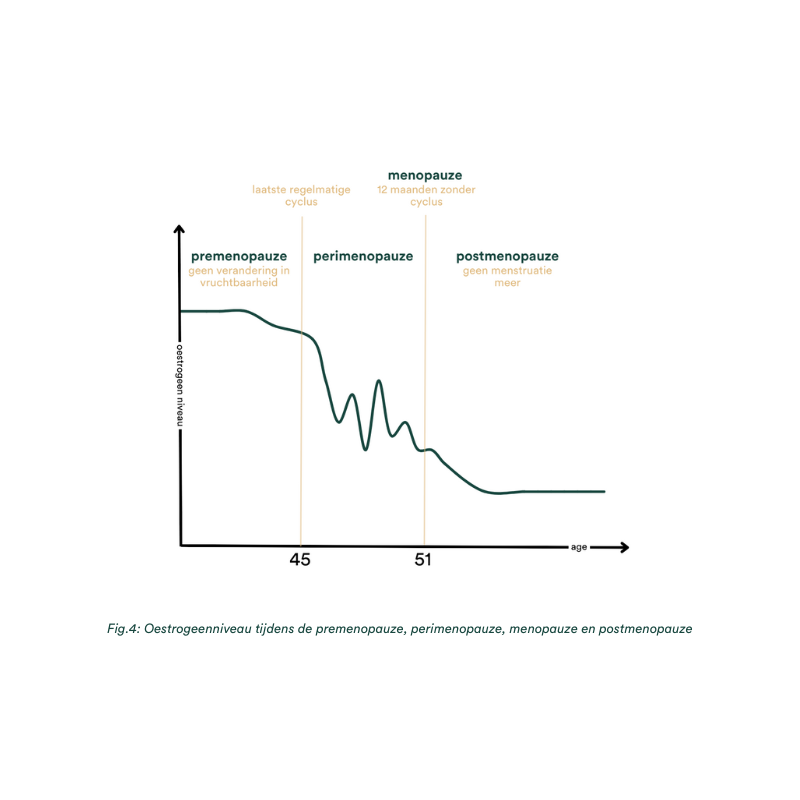
The period before your menopause (last menstruation), there is a decline in the hormone oestrogen. This is already from premenopause, on average from the age of 40, but you will not experience much of this in the first few years.
From the age of 45, this drop in oestrogen suddenly goes much faster. The first consequence is that you will experience irregular cycles. In addition, other symptoms often surface. Not only the well-known hot flushes are typical here. Vaginal dryness, night sweats, sleeping badly and waking up a lot, mood swings and concentration problems are also common during perimenopause.
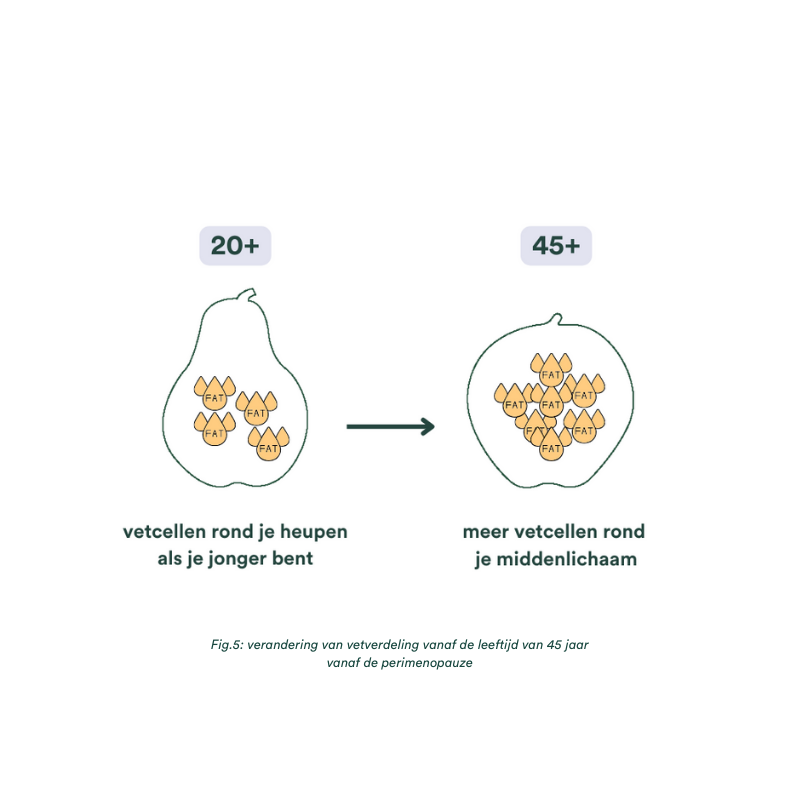
From perimenopause onwards, women also notice that losing weight becomes more difficult. Fat around the hips decreases, but more fat develops around the abdomen.
The explanation for this changing fat distribution is twofold.
1. On the one hand, there is the decrease in hormones from perimenopause onwards. This decline leads to a reduced metabolism and thus more fat storage. Also, your body is still trying to maintain your oestrogen levels. It does this by converting testosterone into oestrone, a substance similar to oestrogen. Three guesses where this conversion happens? Indeed, in your visceral fat, or belly fat.
2. On the other hand, there is the decrease in muscle mass. This is a natural process, inherent to ageing. However, women also move less when they get older. Because of this decrease in muscle, we start burning less glucose and this glucose is stored under the form of visceral fat. So again, there is more fat storage at the level of your abdomen.
How to support your body from perimenopause onwards
Exercise is crucial. Walking is the low-threshold option of choice. That way, you maintain your muscle mass and increase your fat burning. You can boost this fat burning with extra fat-digesting enzymes (lipase). These can be found, for instance, in Insentials' Fat Burner. Moreover, this Fat Burner has a hunger-quenching effect, so it's a win-win!
You cannot counteract the decrease in your hormones themselves. What you can do, however, is optimally support your liver. After all, your liver is crucial for your hormone balance. Moreover, a healthy liver can combat insulin resistance.
How to do this? For instance, choose foods with enough fibre and avoid processed foods. In addition, Insentials' Detox Boost can also provide maximum support.
In the Insentials (Peri)Menopauze Pack, you will not only find this Fat Burner and Detox Boost, but also the Balance Me for extra stimulation of your hormonal balance thanks to the action of Maca, among others.
Need help choosing supplements that best support your hormonal balance?
Contact us for a free and personalised consultation!


